Miami-Dade property guide
Is Mold Remediation Required by Law in Florida?
Understand Florida’s mold licensing rules, rental-property maintenance duties and the questions to confirm before work begins in Miami-Dade.
On This Page
Quick Answer
Finding mold does not, by itself, tell you exactly what Florida law requires for your property. Florida regulates mold assessment and remediation, while repair responsibilities can also depend on applicable building codes, rental obligations and a specific notice or agreement.
Two questions matter: Who is qualified to perform the work, and what work must be completed in your situation? A mold assessment documents property conditions and provides a remediation protocol. It does not determine legal liability.
For a notice, lease dispute or legal deadline, consult a Florida attorney. This guide explains the main distinctions using Florida’s statutes and public agency guidance.
What Do Florida Mold Remediation Laws Cover?
Florida’s mold-services law addresses professional assessment and remediation. It defines the services, establishes licensing requirements and includes exemptions and restrictions on combining roles. Florida Statutes, Chapter 468, Part XVI.
A licensing rule is different from a repair obligation. Knowing that a provider needs the appropriate qualification does not establish who must pay, which building materials must be removed or what a particular notice requires.
| Question | What to confirm |
|---|---|
| Who can perform the service? | The provider’s applicable license, scope and any claimed exemption. |
| What needs assessment or remediation? | The documented conditions and proposed scope of work. |
| Who is responsible for arranging repairs? | The applicable law, property documents, agreements and facts. |
| What will satisfy a written notice? | The issuing authority’s stated requirements and deadline. |
Do Mold Remediation Companies Need to Be Licensed in Florida?
Florida regulates mold professionals, but the law includes defined scopes and exemptions. Avoid relying on a blanket statement that every person performing any mold-related task needs the same license.
The two mold license categories serve different roles:
| License | Service |
|---|---|
| Mold Assessor — MRSA | Assessment involving inspection, sampling, evaluation and findings. |
| Mold Remediator — MRSR | Remediation involving removal, cleaning or treatment of affected materials. |
Before hiring, request the responsible professional’s license number and verify it with Florida’s Department of Business and Professional Regulation. If a provider claims an exemption, ask which exemption applies to the proposed work.
What does the 10-square-foot definition mean?
The statutory definitions of mold assessment and remediation refer to mold growth or affected matter greater than 10 square feet. That language defines the regulated services; it is not a universal declaration that a smaller problem is harmless or needs no attention. Florida Statutes §468.8411.
Are there licensing exemptions?
Yes. Florida’s law includes exemptions for residential owners working on their own property and certain other people or licensed professionals under specified conditions. An exemption does not automatically authorize unrelated construction work or establish that a particular cleanup method is appropriate. Florida Statutes §468.841.
Can the Same Company Assess and Remediate Mold?
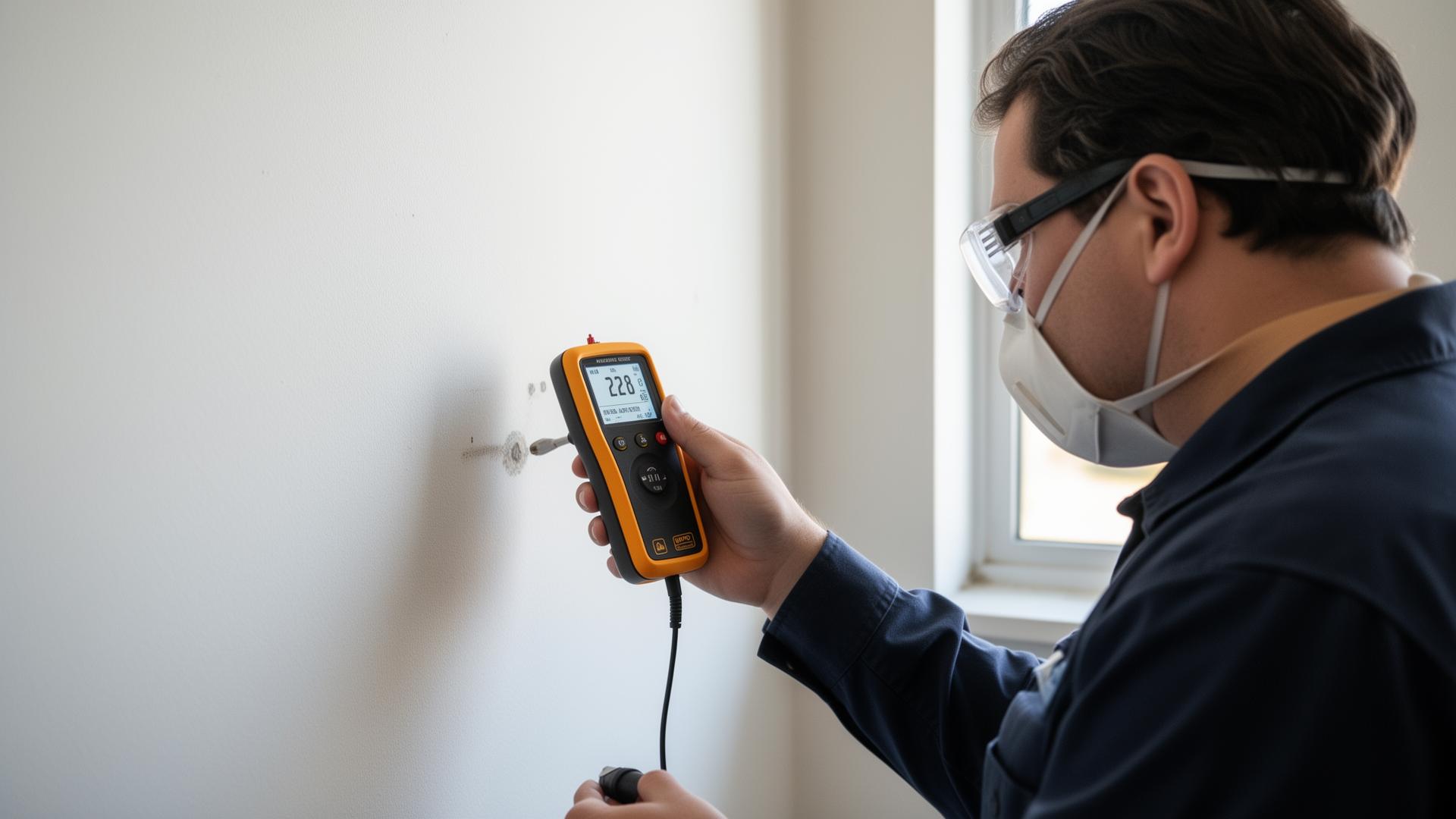
Florida law generally restricts a mold assessor or the assessor’s company from remediating a structure they assessed within the previous 12 months. It also restricts a remediator or the remediator’s company from assessing a structure they remediated during that period.
The statute includes an exception for specified certified Division I contractors, so “the same company can never do both” is too broad. Florida Statutes §468.8419.
Miami Mold Remediation performs mold remediation and removal; it does not perform assessments or clearance. Florida law restricts the same licensee from both assessing and remediating the same project, so any assessment or clearance is arranged separately with a licensed assessor of your choice. Our sister company, Miami Mold Assessment, is one option; both share a common parent, Miami Mold Authority.
Are Florida Landlords Required to Address Mold?
Florida Statute §83.51 requires landlords to comply with applicable building, housing and health codes. Where those codes do not apply, it identifies maintenance duties for structural components and plumbing.
The statute also contains qualifications, including provisions concerning single-family homes and duplexes and conditions caused by a tenant’s negligent or wrongful conduct. Finding mold does not automatically resolve who caused the condition or who must pay. Florida Statutes §83.51.
Document leaks, odors, visible growth and prior repairs. Notify the owner or property manager in writing and keep copies of the communication. Obtain legal advice about disputed responsibilities or remedies.
Tenants who are paying for remediation need the owner's authorization before affected building materials are removed. We confirm the scope, authorization and payment arrangements before work begins.
For the payment discussion, see who pays for mold remediation.
Is Mold a Health Code Violation in Miami-Dade?
A mold concern is not automatically a code-enforcement finding. The property’s condition, applicable rules and the authority responsible for that address need to be considered.
If you receive a notice, ask the issuing office which condition must be corrected, what documentation it expects and whether permits or inspections are required. Share the notice before agreeing to a remediation scope.
Can you contact the health department about mold?
Florida’s Department of Health provides mold information, technical guidance and referrals to appropriate resources. It does not provide mold testing. Its mold guidance directs people with health questions to their county health department and provides information for concerns involving apartments, hotels and workplaces. Florida Department of Health: Mold.
For a property-specific enforcement question, confirm which county or municipal office handles the issue. A private assessment report documents findings; it is not an official code-enforcement ruling.
What Documents Should You Keep?
Keep records that explain the condition, the agreed work and what was completed:
- Dated photographs and information about leaks or previous repairs.
- Written communications, notices and relevant property documents.
- The assessment report, laboratory results and remediation protocol.
- The agreed remediation scope, itemized estimate and invoice.
- Any separately arranged post-remediation assessment or clearance report.
Miami Mold Remediation provides reports, laboratory results, protocols, photos, itemized estimates and invoices for the services performed. You can provide these records to your property manager, attorney or insurer as needed.
Clearance testing is quoted separately when requested by the homeowner or insurance company. Confirm any requirement in your notice, agreement or claim before scheduling it.
Read what a mold assessment report includes for the documentation details.
Frequently Asked Questions
Does Florida’s mold licensing law require routine testing in every home?
The licensing provisions define and regulate mold services; they do not establish a routine testing schedule for every home. A particular transaction, notice or agreement may raise separate requirements.
Visible growth, recurring moisture, a persistent musty odor or concern about concealed damage are reasons to call. An independent assessment, arranged separately with a licensed assessor, can help document the conditions.
Can a homeowner remove mold from their own property?
Florida’s mold-services law includes an exemption for a residential owner performing remediation on their own property. That exemption is not a finding that every project is suitable for do-it-yourself work. The affected materials, access, moisture source and other applicable requirements still matter. Florida Statutes §468.841.
Does mold remediation require a permit?
Confirm the answer with the building department responsible for the property and describe the actual work proposed. Cleaning, material removal, reconstruction and plumbing, roofing or electrical repairs should not be treated as one identical scope.
A mold-services license does not by itself authorize work that requires a separate construction license. Florida’s statutory definitions expressly preserve those construction-licensing requirements. Florida Statutes §468.8411.
What should I do if I receive a notice about mold or water damage?
Keep the notice, confirm its requirements and deadline with the issuing authority, and share it when requesting professional services. An assessment can document the evaluated conditions and provide a remediation protocol.
Do not assume that booking a visit changes a deadline or resolves the notice. Obtain legal advice if you dispute it or need help understanding your obligations.
Will insurance pay because remediation has been requested?
A request for work does not itself confirm insurance coverage. Ask your insurer about your policy and claim before relying on reimbursement.
You pay Miami Mold Remediation directly. We provide documentation you can submit to your insurer. See our mold insurance coverage guide.
Official Resources
Related Guides
Discuss Your Property’s Mold Concern
Tell us about the property, the areas of concern and any written requirements you need the work to address. We provide mold remediation and removal for residential and commercial properties throughout Miami-Dade.
Every remediation project receives a property-specific quote. Start with a free phone consultation at (786) 829-7088.
Remediation, commercial properties and multi-unit projects receive a property-specific quote. We confirm the scope and price before the visit, with payment due upon arrival.