Miami-Dade property guide
What Happens During Mold Remediation? The Process Explained
Know what to expect before the crew arrives, while equipment is running and when the agreed work is complete.
On This Page
Quick Answer
During mold remediation, the crew reviews the agreed work, contains the affected area, cleans or removes affected materials, and uses drying and air-filtration equipment as needed. Monitoring visits help track conditions before the remediation scope is completed.
The work depends on the property and the agreed quote. Independent clearance testing, permanent leak repairs and rebuilding are arranged separately. Occupants stay outside the contained work area.
1. Review the Scope and Remediation Protocol
Before work begins, Miami Mold Remediation discusses the affected areas, the proposed work, access arrangements and your property-specific quote.
Share any existing assessment report or remediation protocol. Tell us whether there is an active leak and whether a plumber, roofer or HVAC specialist has already evaluated it.
Your quote should make clear which areas and materials are included, what work will be performed and what is arranged separately. We also confirm any required owner or management authorization before removing building materials.
What Is a Mold Remediation Protocol?
A remediation protocol provides guidance for addressing the conditions identified during an assessment. It may describe affected areas, materials, recommended work and any post-remediation evaluation requirements.
It helps the remediator plan the work and helps the property owner understand the proposed scope. If additional affected areas are discovered, the findings and any proposed scope changes should be discussed before additional work proceeds.
Miami Mold Remediation performs remediation and removal only; it does not perform mold assessments, sampling, laboratory testing or clearance. When an assessment or post-remediation clearance is needed, it is arranged and paid for separately with a licensed assessor of your choice, often the assessor who evaluated the property first. Our sister company, Miami Mold Assessment, is one option; both companies share a common parent, Miami Mold Authority.
What Happens if the Leak Is Still Active?
You can contact us promptly to discuss the damage. Active water intrusion needs to be controlled before remediation proceeds.
Depending on conditions, temporary assistance may include shutting off the main water supply or arranging a roof tarp. Permanent plumbing, roofing and HVAC repairs are handled by the appropriate specialists.
2. Contain the Affected Work Area
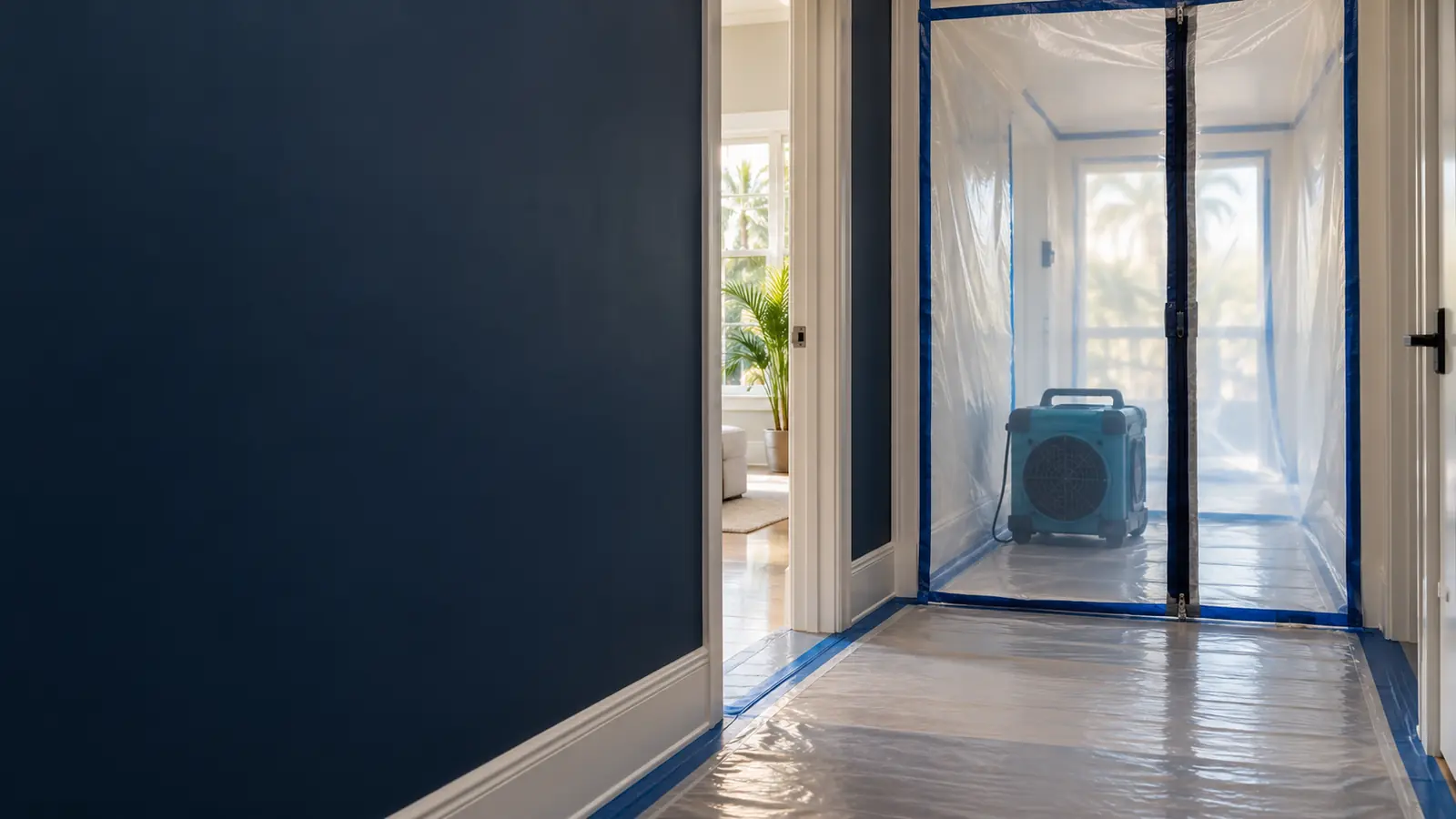
Containment separates the work area from other parts of the property and helps limit the spread of dust and mold particles during cleanup and material removal.
The containment arrangement depends on the location and scope of the work. Air-filtration equipment may be used as part of that plan.
Before starting, we discuss access to the work area, equipment placement and any restrictions that affect the rest of the property.
Occupants and pets must stay outside the contained remediation area. Do not open barriers or adjust equipment yourself. Contact the crew if access is needed or something changes.
3. Clean or Remove Affected Materials
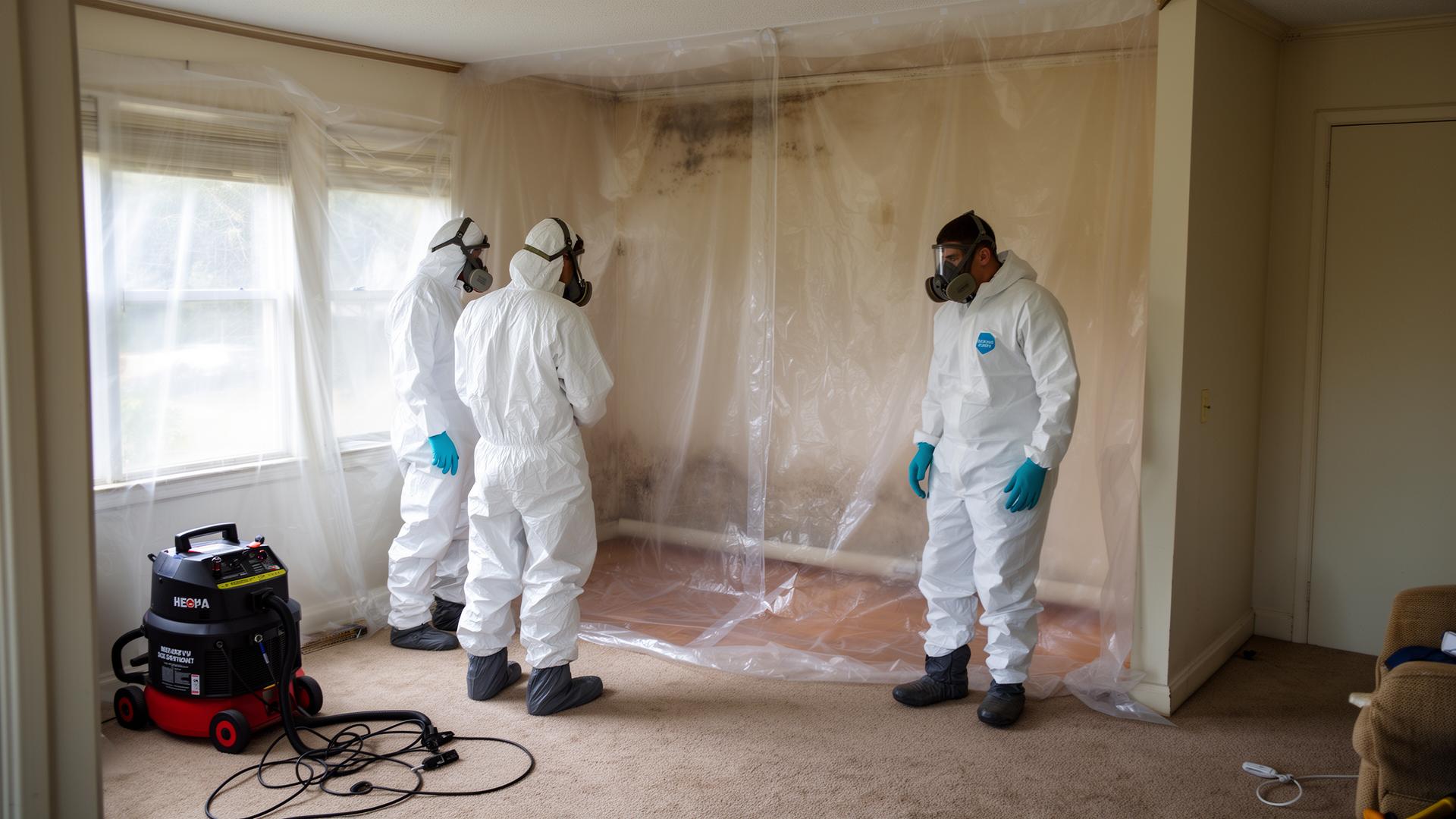
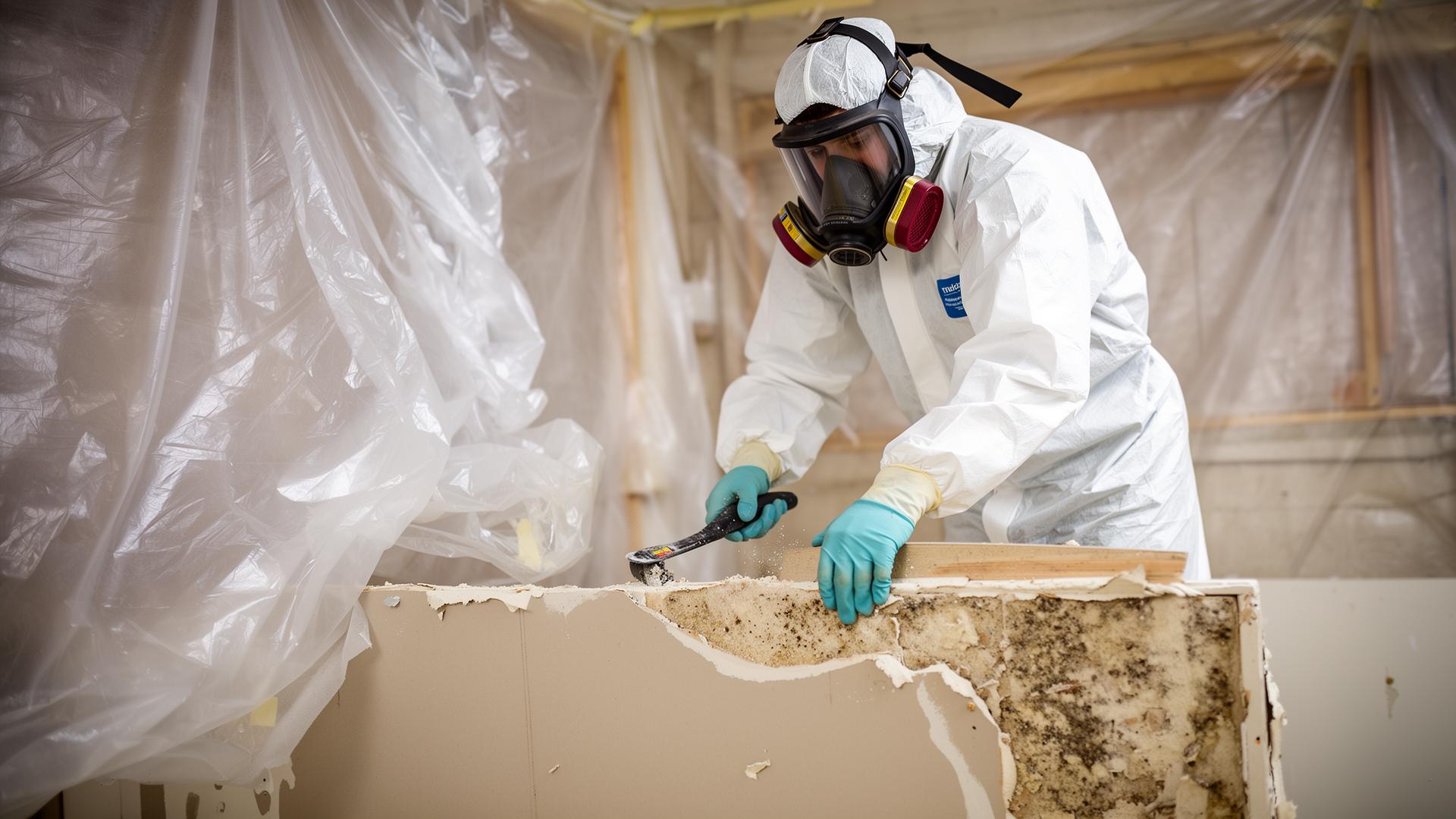
The crew cleans suitable surfaces and removes affected materials included in the agreed quote.
Depending on the property, removal may include:
- Drywall.
- Insulation.
- Flooring.
- Baseboards.
- Cabinets.
The findings and scope determine what is cleaned, retained or removed. A material should not be promised as salvageable before its condition is evaluated.
If opening a wall or removing flooring reveals additional affected materials, we discuss those findings and any proposed change to the work and price.
Mold removal is part of the remediation service when affected materials need to be removed. Learn more about our mold removal services.
Drywall replacement, painting and rebuilding are separate. You choose the contractor for those repairs.
4. Dry, Filter and Monitor
Where needed, drying and HEPA air-filtration equipment continue operating after the initial crew visit.
These serve different purposes: drying equipment helps manage moisture, while air filtration captures airborne particles. The equipment used and how long it remains depend on the affected materials and conditions.
We make monitoring visits to check equipment, take moisture readings and evaluate progress. The crew does not normally remain inside your home for the entire period that equipment is operating.
We explain the expected schedule and equipment instructions. Do not switch equipment off or move it without discussing the change with us.
For a detailed breakdown of crew visits, equipment time and separate repair schedules, see how long mold remediation takes.
5. Review Completion and Clearance Requirements
The agreed remediation work and the conditions at the property guide the completion review. Equipment running for a set number of days does not, by itself, establish that the work is complete.
EPA guidance emphasizes moisture control and visual evaluation when assessing cleanup. A sampling result does not replace inspection of the remediated area. Read EPA’s guidance on evaluating remediation.
Who Handles Post-Remediation Clearance Testing?
When clearance testing is requested or required for the project, you choose a separate assessment company. Many customers use the assessor who performed the initial assessment.
Clearance testing is not included in Miami Mold Remediation’s remediation quote. Its fee, sampling scope, scheduling and report turnaround are confirmed with the assessment company.
Tell us about homeowner, insurer, building-management or protocol requirements before work begins so the timing can be coordinated.
Clearance is arranged separately with a licensed assessor of your choice and is not included in our remediation quote.
What if the Assessor Identifies a Concern?
Send us the assessor’s report so we can review the findings against our agreed scope.
If additional corrective work is needed to complete our original scope, we will return to address it. New water damage, newly affected areas or work outside that scope require a separate evaluation and quote.
Assessment and clearance-testing fees remain separate. No passing result or completion date is guaranteed in advance.
6. Plan Repairs and Keep Your Records
After the remediation work, coordinate any required clearance evaluation and remaining moisture-source repairs before arranging rebuilding.
Your chosen contractor handles replacement drywall, painting, flooring installation or other reconstruction. An HVAC specialist handles internal AC-system or duct cleanup and HVAC repairs; we remediate affected building areas included in our quote.
Keep the documents relevant to your project:
- The initial assessor’s report, laboratory results and remediation protocol.
- The agreed remediation scope and any approved changes.
- Photographs, itemized estimates and invoices.
- Any separately obtained clearance report.
If you plan to seek insurance reimbursement, you pay Miami Mold Remediation directly. We provide documentation for the services performed for you to submit to your insurer. Coverage and reimbursement depend on the policy and insurer’s decision.
Read more about insurance coverage for mold remediation.
Frequently Asked Questions
How much disruption should I expect, and can I stay home?
Expect restricted access to the work area, equipment noise and crew visits. For localized work, you may be able to remain in available, unaffected areas when conditions allow.
Discuss your living arrangements and any occupant health concerns before work begins. Whole-home work or inadequate separation may require other arrangements. EPA describes the factors to consider when deciding whether occupants should relocate.
Will the crew need access to my entire home?
Access is based on the agreed work areas and the routes needed for equipment, materials and monitoring. We discuss those arrangements beforehand. Additional areas are not automatically included in the quote.
What should I do with belongings in the affected area?
Ask us before moving belongings out of the affected area. Tell us which items became wet or have visible concerns so their handling can be discussed.
Do not assume that furniture cleaning, contents restoration or replacement is included in a quote for building-material remediation.
How can I check progress without entering containment?
Ask for an update on the work completed, current conditions and any changes to the expected schedule. Photographs and discussions with the crew can help you understand progress without entering the work area or opening barriers.
Raise questions about the scope or findings promptly. An independent assessor can discuss separately arranged evaluation when needed.
What happens if clearance testing identifies an issue?
We review the assessor’s findings against our original scope. If further work is needed to complete that scope, we return to address it. New damage or areas outside the agreed work require a separate evaluation and quote.
Any follow-up assessment or testing is arranged and paid for separately.
Does remediation mean mold can never return?
No. New leaks or unresolved moisture can support future growth. Remediation addresses the agreed work; ongoing building maintenance and moisture-source repairs remain important afterward.
For more detail, read why mold can return after remediation.
Trusted Resources
Related Guides
Discuss the Work Needed at Your Property
Tell us which areas are affected, whether there is an active leak and whether you already have an assessment report or remediation protocol.
Miami Mold Remediation provides mold remediation services for residential and commercial properties throughout Miami-Dade County. Every remediation project receives a property-specific quote.
Emergency remediation is available 24/7. After-hours and phased commercial work are available.